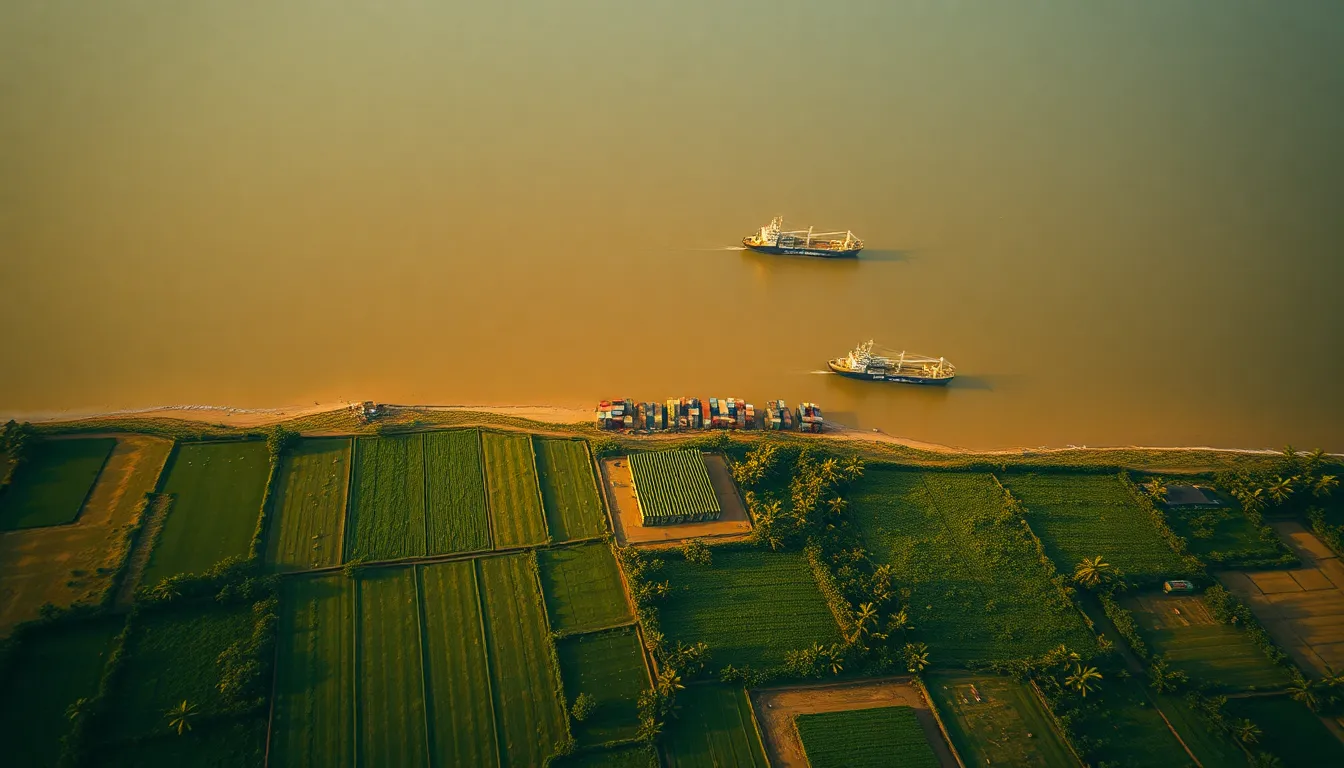
The deck never stopped at the national border. Once the loop works for a country, the same logic scales outward — because hunger, price shocks and climate do not respect borders.
The deck’s finale
- 1SAARC
A South Asian agri exchange — shared staples, shared monsoon risk.
- 2ASEAN
Link to South-East Asia, where APTERR already pools a rice reserve.
- 3Asia
A pan-Asian market — the bulk of the world’s farmers and eaters.
- 4World
An international agri exchange — the cycle, closed at planetary scale.
The real constraint isn’t technology — it’s policy
A world exchange is not blocked by a lack of platforms. It is blocked by export bans, duties and stockholding rules that switch on and off with domestic politics. So the honest international feature is not a grand new market — it is transparency: showing where produce is competitive, and which policy stands in the way.
The pieces already exist
- AMIS — the G20/FAO Agricultural Market Information System gives the world shared visibility of stocks and prices, created after the 2007–08 price crisis.
- APTERR — ASEAN+3 already runs a working multi-country emergency rice reserve: a real, if modest, version of the deck’s regional exchange.
- Commodity exchanges — NCDEX/MCX at home and CBOT/Euronext globally already do price discovery and hedging the deck imagined.
A buildable next step
An international price-parity & export-policy dashboard: world FOB prices beside the domestic mandi price, with each country’s live export-policy status — so a farmer, an FPO or a minister can see, at a glance, where Indian produce wins and what rule is holding it back. India already exports ≈ US$ 51 billion of agriculture a year; the headroom is policy, not capacity.
See the price intelligence we’ve built →Sources
- ↗ AMIS — Agricultural Market Information System — G20 / FAO
- ↗ APTERR — ASEAN+3 Emergency Rice Reserve — ASEAN+3
- ↗ NCDEX — National Commodity & Derivatives Exchange — NCDEX
- ↗ Agricultural & processed-food export statistics — APEDA / DGCIS, Govt. of India