The 2015 proposal
An independent crop grading/standards authority — third-party, coded to avoid bias, results to a central database, with final rates set by quality.
Where it stands in 2026
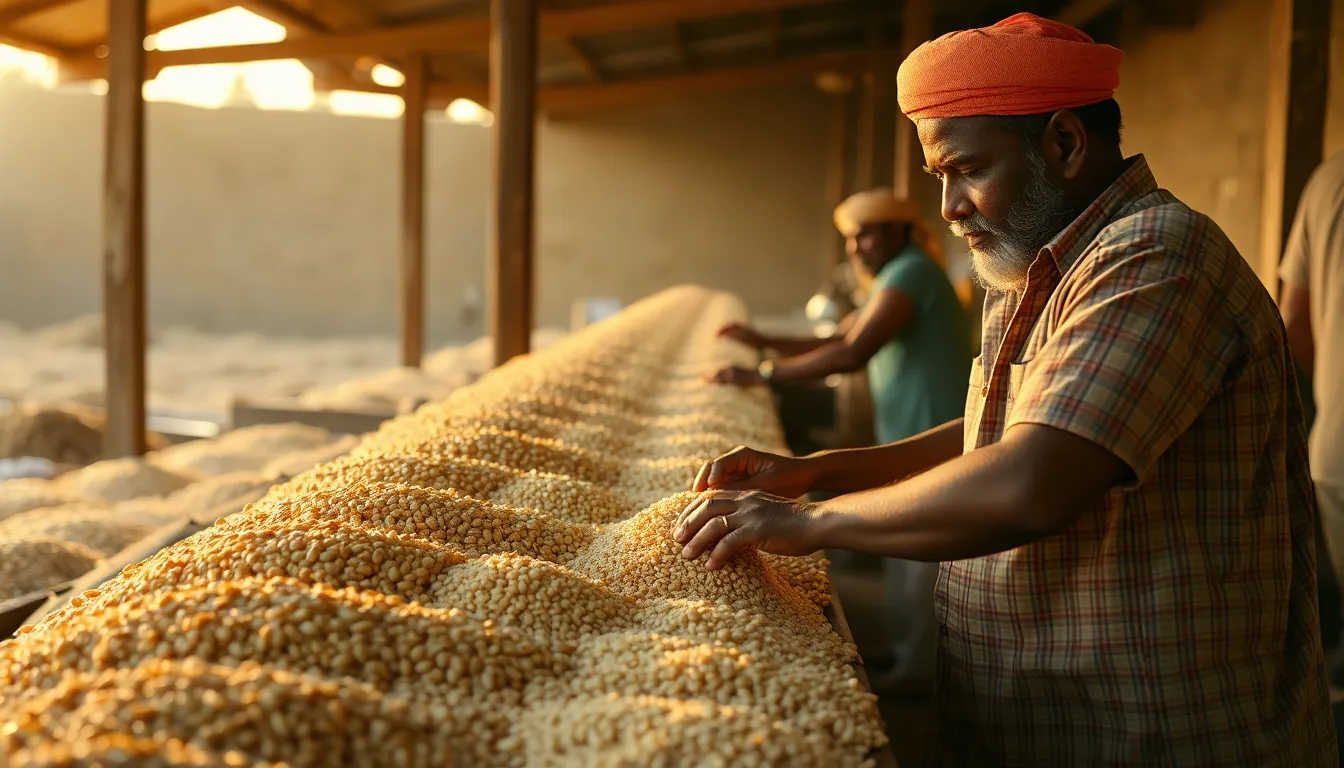
The standard-setting exists — AGMARK for agricultural grades, FSSAI for food safety — but a standard on paper does not create trust in a specific lot sold sight-unseen. The genuinely new development is machine assaying: AI/ML quality testing now runs in 134 e-NAM mandis in Rajasthan, turning a slow, subjective, manually-graded sample into a fast, objective, repeatable reading, and Telangana’s Saagu Baagu added AI soil and quality testing for chilli. This is the missing piece — an assay a distant buyer can believe without re-inspecting the goods themselves.
The open gap
Standards exist on paper; trust in a specific lot’s grade, sold sight-unseen across mandis, is the real bottleneck.
The path to close it
Trust in the grade is the true bottleneck for sight-unseen, inter-mandi trade: a buyer in Chennai will not bid on a lot in Chitradurga unless they believe the grade attached to it. Scale AI/ML machine assaying — already live in 134 Rajasthan e-NAM mandis and in Telangana’s Saagu Baagu — to every regulated market, stamp the machine assay onto the lot’s digital record, and let a graded lot trade across mandis without physical re-inspection. Keep AGMARK and FSSAI as the standard-setters, but let independent, machine-verified assaying carry the trust between buyer and seller. An assay that travels with the lot is what turns thousands of local markets into one national one — the same trusted-grade layer the e-scales, warehousing and national-exchange prerequisites all lean on.
Specifications — what “built” requires
Illustrative — a proposed specification and sequence, not an official government roadmap.
Acceptance criteria
- Every regulated market runs machine (AI/ML) assaying, not only manual grading.
- The machine assay is stamped onto the lot's digital record and travels with it.
- A graded lot trades across mandis without physical re-inspection.
- AGMARK/FSSAI remain the standard-setters; assaying is independent and auditable.
- Assay results are reproducible and published with the lot.
Technical spec
- Assay
- AI/ML grading per commodity, calibrated to AGMARK grades
- Coverage
- every regulated market + FPO collection centre
- Record
- machine assay attached to lot-ID; immutable, audited
- Standard
- AGMARK grade definitions; FSSAI safety parameters
- Reproducibility
- calibration + periodic audit; published method
- Trust
- independent operator; results portable across mandis
Roadmap to built — phase 1 → 2 → 3
Illustrative — a proposed specification and sequence, not an official government roadmap.
- 1Phase 1 · Now
Calibrate machine assay
Calibrate AI/ML assayers to AGMARK grades and deploy them to lead mandis.
Objective, repeatable machine grades exist.
- 2Phase 2 · 6–12 months
Attach the grade to the lot
Stamp the assay onto the lot-ID and publish it with the lot.
The grade travels with the goods.
- 3Phase 3 · 12–24 months
Cover every market
Roll machine assaying out to every regulated market and FPO collection centre.
Graded lots trade sight-unseen across mandis — built.
Where it sits in the chain
See the full map →Sources
- ↗ e-NAM (National Agriculture Market) — Ministry of Agriculture & Farmers' Welfare
- ↗ Return to quality in rural agricultural markets: Evidence from wheat markets in Ethiopia — IFPRI / Journal of Development Economics (CGSpace), 2024
- ↓ Understanding Codex (Fifth Edition) — Codex Alimentarius Commission, FAO/WHO, 2018
- ↗ Voluntary standards and certification for responsible agricultural production and trade — FAO, 2003
- ↗ AGMARK Grades and Standards — Directorate of Marketing & Inspection, Government of India, 2024
- ↗ Saagu Baagu — AI-driven agriculture initiative for chilli farmers, Telangana — FAO Digital Villages Initiative (Govt of Telangana + World Economic Forum), 2024